Equipment Rental Rates in Egypt: How Daily, Weekly and Monthly Quotes Are Built
In this article
A procurement manager in Sixth of October asks the same fleet for the same 4-tonne telehandler three different ways: nine days to cover a façade package, one month to carry the finishing phase, and three months to reach handover. Three numbers come back, and the cost per working day drops sharply each time. The machine did not change. What changed is the risk the lessor is carrying.
That is the most useful thing to understand about equipment rental rates in Egypt: the daily, weekly and monthly figures on a quote are not three ways of writing the same price. They are three different commercial products, built on different assumptions about utilisation, mobilisation and who absorbs the idle time between jobs.
Because pricing here is quote-based rather than published, the only way to compare offers intelligently is to understand what each term is actually pricing.
Why a month never costs four weeks
Every hire carries a block of cost that has nothing to do with how many days the machine works. It is spent once, whether the rental runs for three days or three months:
- Mobilisation and demobilisation. Loading, the low-bed or float, the route, the escort where one is needed, and the return trip. On a long haul this can rival a meaningful slice of a short hire's total value.
- Inspection and handover. Pre-delivery checks, condition reporting at both ends, and the paperwork that goes with them.
- Commercial admin. Contract, insurance confirmation, site induction documents, invoicing, collection.
- The gap after you. A machine coming off a nine-day hire does not walk straight onto the next site. It may sit in the yard for a week waiting for the next booking.
Spread that block across nine days and it lands heavily on each one. Spread it across ninety and it almost disappears. A long commitment also transfers certainty to the lessor: the machine is earning for a known period, so the price no longer has to carry the cost of guessing.
There is a wear argument too, and it runs the same direction. Short hires concentrate the punishing part of a machine's life — repeated loading and transport, cold starts, and a fresh operator learning an unfamiliar cab every few weeks. Ninety steady days on one site is gentler on a machine than thirty scattered days across six sites.
So the structural rule holds almost everywhere: a week costs well below seven daily rates, and a month costs well below four weekly rates. If a quote you receive does not show that taper, it is worth asking why.
What a "day" actually means on the invoice
Two quotes can name the same daily figure and still bill differently by a wide margin, because "a day" is a defined term and the definitions differ. Before comparing anything, pin these down:
- Shift length. Most quoting in Egypt assumes a single day shift, commonly eight hours. Some fleets quote against ten. A second shift, or night work, is normally a separate conversation rather than a free extension of the same day.
- The hour ceiling. Monthly rates are usually written against a maximum number of engine hours, derived from the assumed shift and a working-day count. Beyond that ceiling, extra hours bill at an agreed rate. Ask for the ceiling number and the overtime rate together — one without the other tells you nothing.
- Calendar days or working days. Does the month include Fridays and public holidays as billable, or is the rate built on working days only? Both conventions exist, and the difference over a long hire is not small.
- When the clock starts and stops. Some contracts run from dispatch, some from arrival on site and signed handover. At the other end, the meaningful date is when you formally request off-hire — not when the truck eventually arrives to collect. Get the off-hire mechanism in writing, with a reference number or an email trail.
| Term | What it typically prices | Ask before you sign |
|---|---|---|
| Daily | A short, defined task with a firm end date | Minimum number of days? Is transport inside or outside the rate? |
| Weekly | A discrete work package — a slab pour, a lifting campaign | Is a week seven calendar days or five to six working days? |
| Monthly | A project phase with predictable continuous demand | Monthly hour ceiling, overtime rate, and treatment of holidays |
| Multi-month | A machine effectively dedicated to your site | Rate review points, maintenance windows, replacement machine policy |
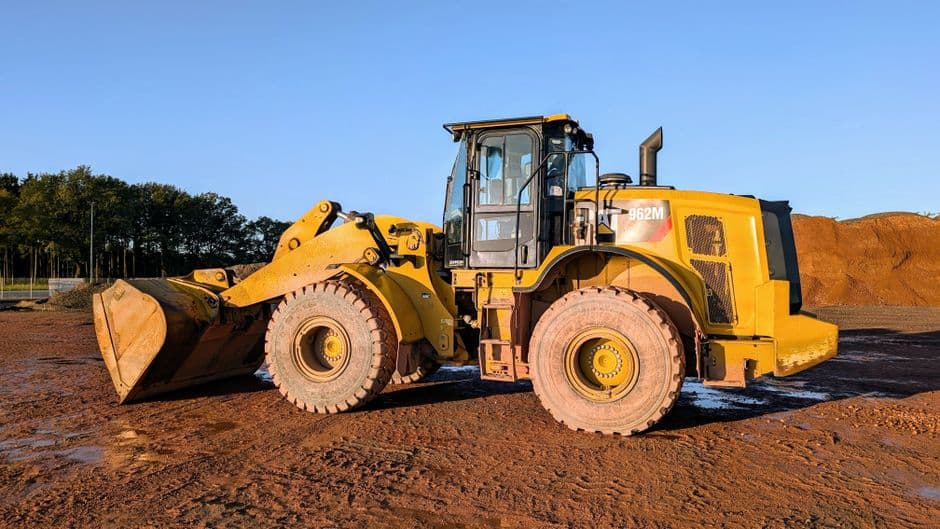
Working hours, standby hours, and the difference between them
An excavator is either digging or it is waiting for trucks. A mobile crane on a lifting day spends most of its hours idle between picks. Both states cost the lessor something — the machine is on your site and unavailable to anyone else — but they do not cost the same.
How that gets handled varies. Some quotes bill purely on calendar time and ignore the hour meter entirely until an overall ceiling is passed. Others bill working hours at one rate and standby at a reduced one. Others treat the whole day as billable regardless. None of these is wrong; they are different ways of allocating the same risk. The mistake is assuming your quote works the way the last one did.
If your programme has genuine standby built into it — a crane retained across a slow week, a generator on a site that only draws load half the time — say so at the quoting stage. A rate structure written with standby in mind almost always beats an argument about the hour meter after the fact.
Minimum hire periods
Almost every fleet applies a minimum, and it is usually the first thing that surprises a first-time hirer. A machine that spends half a day on site may still bill for the minimum period, because the mobilisation cost is identical either way. Minimums tend to be longer for machines that are expensive or awkward to move — tower cranes obviously, but also large wheel loaders and anything needing a low-bed and a permitted route.
This matters most when a task genuinely takes a day and a half. Two full days at the daily rate can easily exceed a weekly rate, at which point the weekly term buys you slack for free. Always ask for the next term up before accepting a short hire.
What sits inside the rate, and what sits outside
This is where two quotes that look far apart usually turn out to be describing different scopes.
| Line item | Common treatment in the Egyptian market |
|---|---|
| Transport to and from site | Frequently quoted separately, and priced by distance and machine class |
| Operator | Depends entirely on whether the hire is wet or dry; heavier classes usually come with an operator |
| Fuel | Most often the hirer's cost, refilled on site |
| Routine servicing and wear parts | Usually the lessor's responsibility on an operated hire; more negotiable on a dry one |
| Major breakdown | Normally the lessor's, but confirm the response commitment and what happens to billing during downtime |
| Insurance and damage liability | Almost always split, with a defined excess — read this clause properly |
| Fuel price movement on long hires | Sometimes subject to review on multi-month terms; ask whether the rate is fixed |
The distinction between operated and bare hire changes more of this table than anything else, and it is worth reading wet rental versus dry rental before you compare offers. Mobilisation is the other big variable, and it deserves its own scrutiny — the practicalities are covered in this guide to moving heavy equipment between sites.
The most valuable question you can ask a lessor is not "what is your rate?" It is "what does that rate not include?"
What actually moves the number
Rather than chasing figures, understand the levers. A quote for the same nominal machine class moves on:
- Capacity and configuration. A 20-tonne excavator with a breaker, a quick coupler and a second bucket is not the same product as a bare 20-tonne machine.
- Distance and access. Delivery into central Cairo with a night window and a narrow gate is a different mobilisation from a straight run to an open site on the Ring Road.
- Duration and certainty. A firm three months prices better than an open-ended arrangement that might end next week.
- Utilisation profile. Continuous double-shift work loads a machine far harder than intermittent lifting, and pricing reflects that.
- Timing and demand. Fleet availability is seasonal and project-driven. Booking a scarce class at short notice into a busy period is the most expensive way to hire anything.
- Site conditions. Rock, abrasive material, deep water, and heavy dust all shorten component life, and lessors price accordingly.
If you want a realistic number, give the lessor all six. A quote written against a vague description gets padded to cover what wasn't said. You can browse available machines by class first, then send the scope — it makes the conversation faster in both directions.
Choosing the right term for the job
| Job shape | Usually the right term |
|---|---|
| One-off lift, a single dig, a defined day's work | Daily, checked against the minimum period |
| A work package with a fixed sequence — pour, erect, backfill | Weekly |
| A project phase running continuously for weeks | Monthly |
| A machine your programme depends on for a season | Multi-month, with a rate review clause |
| Demand that repeats every month indefinitely | Time to run the ownership comparison — see renting versus buying |
Comparing two quotes on equal terms
Before you decide anything, normalise both offers against the same checklist: term and minimum period; assumed shift length and the monthly hour ceiling; overtime rate; whether transport both ways is in or out; operator, fuel and consumables; who carries breakdown downtime; deposit amount and refund conditions; payment terms; damage excess; and the off-hire procedure.
Nine times out of ten, the cheap quote and the expensive quote converge once that list is filled in — and the remaining difference is a real difference, which is the only kind worth negotiating. When you have the scope defined, request a project quote with the duration, the site location and the utilisation profile stated up front, and compare what comes back line by line rather than headline to headline.
Sources and scope
Each source supports the topic described below, not every statement in this article. Foreign guidance does not replace Egyptian requirements or site rules. Use the manual matching the machine model and serial number for operation.
- Caterpillar — Rent, lease or buy
Cash flow, utilization, maintenance and ownership-cost considerations; not Egypt price data.
- EXON — Sample agreement
Published sample only; the accepted project documents set the actual terms.
Need a machine for your site?
Browse EXON's maintained fleet or talk to the team for a project quote.
Keep reading
Used Generator Prices in Egypt (2026) and What to Check Before Buying One
Used generator prices in Egypt: median asking price, age and supply from 23 Sep 2026 data, what moves the price, and how to inspect and load-test a genset.
Buying a Used Forklift in Egypt: What the Market Lists and What to Check
Buying a used forklift in Egypt: TCM and Komatsu lead the listings, median model year 2010, asking prices, and the inspection of forks, mast, chains and battery.
EXON Weekly: Equipment Offers and Requests, September 22–28
A weekly reading of 11,181 captured posts: equipment offers, buying and rental requests, and the limits of the available sample.