Used Generator Prices in Egypt (2026) and What to Check Before Buying One
In this article
A typical generator ad in Egypt's equipment groups reads "250 kVA, Perkins engine, silent canopy, zero-hour overhaul" and ends with a phone number. No price, no hour reading, no word about the alternator. The used generator price you hear on the phone depends on facts the ad left out, and the only way to know whether it is fair is to collect those facts yourself.
This guide does two things. First, it shows what the used generator market lists and asks, from the EXON Radar snapshot of 23 September 2026. Then it explains what moves the price of a used generator in Egypt and how to inspect and load-test one before you pay. The live figures are on the prices tab and the demand tab of EXON Radar.
What the used generator market lists
| Used generators for sale in Egypt, as of 23 Sep 2026 | Figure |
|---|---|
| Generators among all machines for sale | 953 items (3%) |
| Median model year of generators with a stated year | 2017 (109 units) |
| Median asking price, generators | EGP 280,000 (48 priced ads) |
| Middle half of generator asking prices | EGP 190,000 to 599,000 |
| Requests per 100 generator listings | 6.2 (59 requests) |
Three readings matter for a buyer.
Generators on offer are younger than most machines. The median generator with a stated year was built in 2017, against 2007 for all machines for sale and 1997 for wheel loaders. A ten-year-old generator is not old if it ran as standby behind a factory's grid supply. The same age on a site unit that ran around the clock is a different machine, which is why hours and duty matter more than the year.
The price band is wide because the class is wide. A 20 kVA unit for a villa site and a 500 kVA set for a factory both count as generators, so the middle half of asking prices runs from EGP 190,000 to EGP 599,000. Do not divide the median by an "average kVA" to get a price per kVA; the data does not support it. Use the band to know where a conversation usually starts, and judge the unit in front of you on its rating and condition.
Buyers are not short of choice. At 6.2 requests per 100 listings, generators were far easier to source than dump trucks (33 per 100) or bulldozers (27). If the inspection below turns up a tired engine or a burnt alternator, there is usually another unit to look at.
The ads themselves carry little. Across all machines for sale on that date, only 9.4% stated a price, 24% gave the model year and 5.5% stated the hours, and 35% of sale posts were the same ad posted again. Treat every asking price as the start of a negotiation, and every ad as a lead that still needs facts.
What moves the price of a used generator
Six things decide most of the gap between two generators of the same rating:
- The rating, and which rating. The kVA on the ad may be the standby rating, which the set can carry only for limited hours during an outage, not the prime rating it can carry all day on a site. A "250 kVA standby" set is a smaller prime-power machine. The difference is explained in prime vs standby, silent units, fuel and connection.
- Engine make and parts supply. A well-known engine with mechanics and parts in your governorate is worth more than a rare engine at a good price.
- The alternator. Copper windings in good condition, a working voltage regulator and the alternator's own plate add value. A rewound alternator is not a defect in itself, but ask who did it and when.
- Hours and overhaul history, with invoices. "Zero-hour overhaul" means nothing without a workshop name and a date.
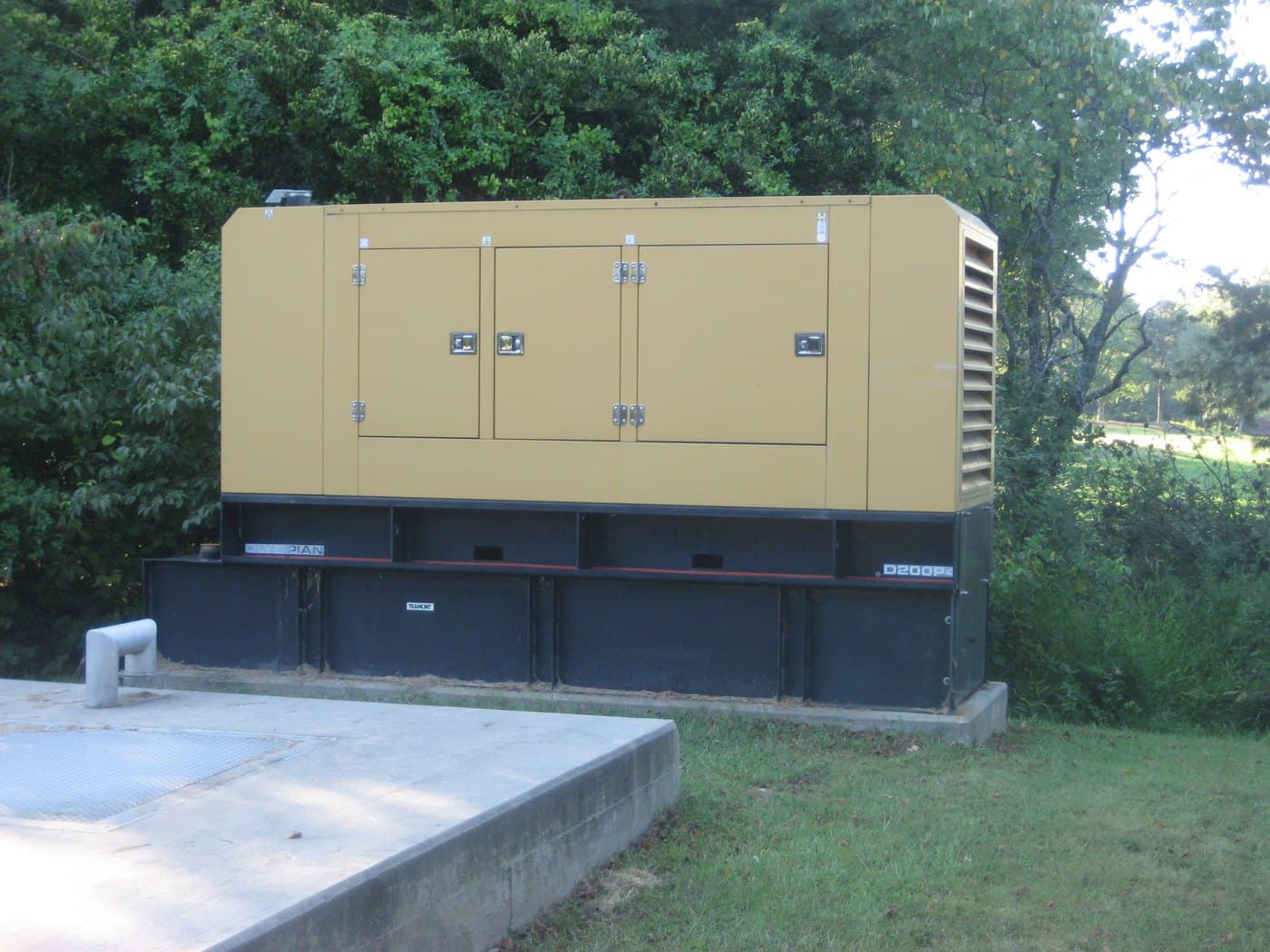
- Canopy and base. A sound silent canopy and a base tank without rust or leaks matter on a residential site.
- Controller and switchgear. A working control panel with readable meters, a main breaker and, for standby use, an automatic transfer switch.
Start from your load, not the ad
Decide the size you need before you read listings. A generator that is too small trips on motor starts; one that is far too large runs lightly loaded all day, which is bad for a diesel engine (more on that below). Running and starting loads are covered in what size generator does your construction site need, and Caterpillar's sizing guidance is listed in the sources. Most sets are rated in kVA at a power factor of 0.8, so a 100 kVA set gives about 80 kW of real power.
Before you travel: the questions that save a trip
- Engine and alternator make, model and serial numbers, with photos of both plates.
- Rating on the plate: kVA, kW, prime or standby, voltage and frequency.
- Hours, and whether the meter or controller has been changed.
- Duty history: standby behind a grid supply, prime power on sites, or a rental yard.
- Last overhaul: what was done, by which workshop, and when.
- Canopy, tank and switchgear included, and whether the batteries and charger come with it.
- Origin and papers: local or imported, purchase invoice and, for an import, the customs papers.
- Whether the seller will run it on load at the viewing, with a load bank or a real load.
The inspection, step by step
Plates and serial numbers. The engine plate and the alternator plate should both be present, readable and match what you were told. A canopy that says one rating and an alternator plate that says a smaller one is the most common mismatch on the market.
Engine. Arrive before the set has been warmed up and watch a cold start. Heavy smoke that does not clear, knocking, or strong blow-by from the crankcase breather point to an engine that needs work. Check the oil for a milky colour and the coolant for an oily film; either one can mean a head gasket or a cooler problem. Look at the radiator fins, belts and hoses. A radiator that is half blocked will hold in October and overheat in August.
Signs of light-load running. Look at the exhaust outlet, the turbocharger and the joints around the exhaust manifold. A black, sticky residue there is the sign of wet stacking: unburned fuel and carbon left in the exhaust when a diesel runs for long periods at light load. Consulting-Specifying Engineer describes it, and notes that long light-load running can glaze the cylinder walls, which costs compression and power and in severe cases needs re-honing or a rebuild. A standby set that was only ever exercised without load can look clean and still carry this damage.
Alternator. Remove the inspection cover if the seller allows it. Burnt smell, darkened windings, melted insulation or dust packed into the windings are warnings. Spin up the set and listen at the alternator end for bearing noise.
Control panel and switchgear. Every meter should read: voltage, frequency, current, oil pressure, coolant temperature and hours. Check the main breaker for burn marks and the cable terminals for heat discolouration. Test the emergency stop.
Canopy, base and tank. Look for rust in the base and tank, fuel leaks around the lines, and water at the bottom of the tank. Check that the canopy doors close, the sound insulation is in place and the lifting points are sound.
Batteries and charger. Weak batteries are cheap to replace, but a battery charger that does not work on a standby set means the set will not start when the grid fails.
The load test is the step that matters
A generator that starts and idles has proved almost nothing. Ask for a test on load, ideally with a load bank, or on a real load close to what you will run.
- Step the load up in stages rather than all at once. A brief dip in voltage and frequency when each step is added is normal; it should recover within seconds.
- Watch the meters. Voltage should hold steady at the level your panel needs, and frequency should stay close to 50 Hz under load.
- Watch the exhaust. Some black smoke at the first steps on a set that ran light is common and should clear as the load rises. Smoke that stays heavy is a problem.
- Run it long enough for the coolant temperature to settle. A set that overheats after forty minutes on load will not survive a summer shift.
- Listen and smell. Knocking, a hunting engine speed or the smell of hot insulation end the test.
If the hour meter is new or broken, read the machine instead: worn panel switches, oil-soaked insulation, filters of different ages and repainted parts tell you more than the display.
Papers
Write the engine and alternator serial numbers, the rating, the hours, the included canopy, tank and switchgear and the price into a written sale contract. The serial numbers should match the invoice and, for an import, the customs papers. Pay no deposit on a set you have not seen run on load.
Buy it, or rent it for the project
A generator that will run standby behind a factory's grid supply for years is usually worth owning. A generator bought for one project's eighteen months of site power often ends up parked, losing value, with batteries going flat. Fuel, servicing and breakdown cover also sit with the owner. When the need is a project phase rather than years, compare the purchase with renting a maintained set; the trade-off is set out in renting vs buying heavy equipment in Egypt. You can browse generator rental for available sizes and current rates, or send your load list to the EXON team on WhatsApp.
Market figures are from the EXON Radar snapshot dated 23 September 2026: public posts in 10 Egyptian heavy-equipment groups on Facebook, read automatically, classified and aggregated. Prices are asking prices in EGP, de-duplicated per seller, model, year and price, not sale prices. A request is a post, not an order. No post text, name or contact detail is republished.
Sources and scope
Each source supports the topic described below, not every statement in this article. Foreign guidance does not replace Egyptian requirements or site rules. Use the manual matching the machine model and serial number for operation.
- EXON Radar — Egypt heavy-equipment market analytics
Aggregate counts from public Facebook equipment groups, snapshot dated 23 Sep 2026; asking prices, not sale prices.
- Caterpillar — Generator sizing
Running and starting loads; model-specific sizing tools.
- Consulting-Specifying Engineer — Preventing wet stacking (2015)
Why diesel generators run at light load leave unburned fuel and carbon in the exhaust, the signs at the stack and turbocharger, cylinder glazing, and clearing it by running on a real load or load bank.
Need a machine for your site?
Browse EXON's maintained fleet or talk to the team for a project quote.
Keep reading
Buying a Used Forklift in Egypt: What the Market Lists and What to Check
Buying a used forklift in Egypt: TCM and Komatsu lead the listings, median model year 2010, asking prices, and the inspection of forks, mast, chains and battery.
EXON Weekly: Equipment Offers and Requests, September 22–28
A weekly reading of 11,181 captured posts: equipment offers, buying and rental requests, and the limits of the available sample.
Buying a Used Excavator in Egypt: What Is Listed and What to Check
Buying a used excavator in Egypt: the Doosan DX300 leads 3,369 listings, median model year 2012, asking prices, and the inspection that protects your money.