Buying a Used Forklift in Egypt: What the Market Lists and What to Check
In this article
Ask a storekeeper in Obour or Tenth of Ramadan what they need and the answer is "a 3-tonne clark". Ask the seller what they have and the answer is "a clean Japanese machine, ready to work". Neither sentence says anything about the forks, the chains or the hours. Buying a used forklift in Egypt means turning those two sentences into facts before money changes hands.
This guide does two jobs. First, it sets out what the used forklift market actually lists, from the EXON Radar snapshot of 23 September 2026: brands, ages, asking prices and how easy a forklift is to find. Then it walks through the inspection, in the order that finds the expensive problems first. The live figures are on the supply tab and the prices tab of EXON Radar.
What the used forklift market lists
| Used forklifts for sale in Egypt, as of 23 Sep 2026 | Figure |
|---|---|
| Forklifts among all machines for sale | 1,005 items (3.2%) |
| TCM share of branded forklift listings | 43% (313 of 731) |
| Komatsu share of branded forklift listings | 28.5% (208 of 731) |
| Median model year of forklifts with a stated year | 2010 (250 machines) |
| Median asking price, forklifts | EGP 559,500 (24 priced ads) |
| Middle half of forklift asking prices | EGP 230,000 to 1,050,000 |
| Requests per 100 forklift listings | 2.2 (22 requests) |
Three readings matter for a buyer.
Two Japanese brands are most of the market. TCM and Komatsu together carry more than 70% of the branded forklift listings. That is good news for a buyer: mechanics, parts dealers and second-hand parts for these two are easier to find in the industrial zones than for a rare brand. Before you fall for an unusual machine at a good price, ask who services that exact model in your governorate and how long a mast seal or a steering cylinder takes to arrive.
The typical machine is about fifteen years old. The median forklift with a stated year was built in 2010. A machine of that age has usually had more than one owner and at least one major repair. The year on the ad matters less than what was done to the engine, transmission, mast and battery since.
It is a buyer's market. At 2.2 requests per 100 listings, forklifts were among the easiest machines to source in the groups, far from the pressure on dump trucks (33 per 100) or bulldozers (27). Nobody needs to buy the first forklift they see. If the inspection turns up a cracked fork or a tired transmission, walk away and find another.
Reading the asking price
The median of EGP 559,500 rests on only 24 priced ads, and the class mixes very different machines: a 1.5-tonne electric warehouse truck and a 10-tonne diesel for a marble yard both count as forklifts. Treat the range as a band that tells you where a conversation starts, not as a valuation of the machine in front of you.
The ads themselves leave most of the facts out. Across all machines for sale on that date, only 9.4% stated a price, 24% gave the model year and 5.5% stated the engine hours, and 35% of sale posts were the same ad posted again. The price is settled on the phone, so the questions below are how you collect what the ad does not carry.
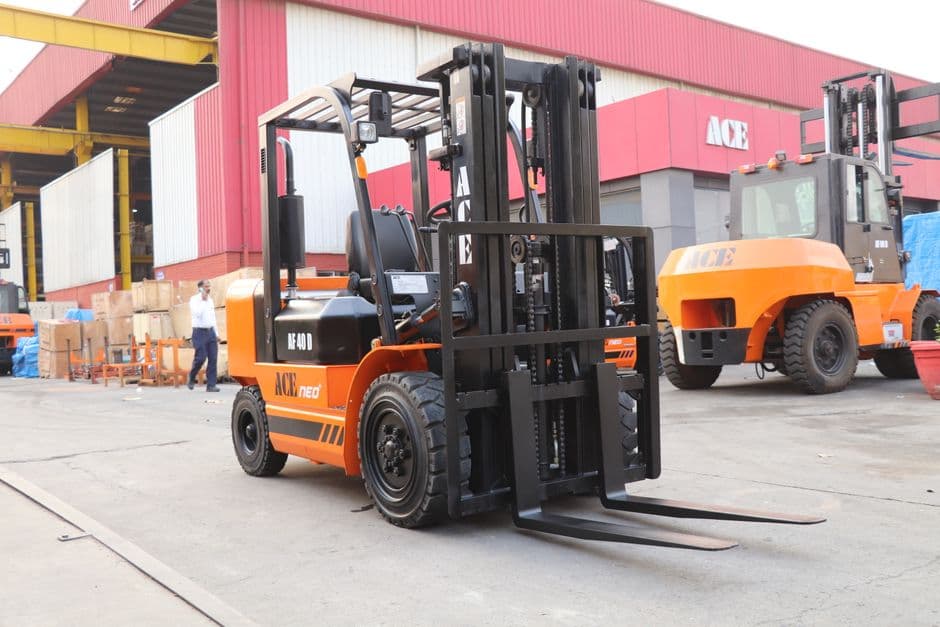
Start from the job, not the ad
Decide the capacity, lift height and power source before you look at listings. The rated capacity on a forklift's data plate holds only at a stated load centre and mast height, and attachments reduce it. The full method is in how to choose a forklift: capacity, load centre, mast height and tyres, and the choice between engine and battery in diesel vs electric forklift.
For a used machine this matters twice. A "3-tonne" truck that has been fitted with a higher mast, a side shift or a clamp is no longer a 3-tonne truck at the height you need, and a used electric truck is only as good as its battery.
Before you travel: the questions that save a trip
- Brand, model, year and serial number, with a photo of the data plate.
- Hours, and whether the meter works. Ask whether the meter or the dashboard has ever been changed.
- Where it worked: a clean warehouse, a building-materials yard, a port, or a rental fleet. Yard and port machines live harder lives.
- Mast type and maximum fork height, and the lowered mast height if it has to pass a door or enter a container.
- Attachments: side shift, fork positioner, clamp, and whether the data plate was updated when they were fitted.
- For electric trucks: battery voltage, age and when it was last replaced, and whether the charger comes with it.
- Repair history: engine, transmission, mast seals and chains, with invoices.
- Origin and papers: local machine or import, purchase invoice and, for an import, the customs papers.
The inspection, in the order that finds problems fastest
Data plate and serial number. Start here. The plate should be on the truck, legible, and match the model you were told. OSHA's forklift standard requires nameplates to be kept in place and legible, and says that modifications affecting capacity must be reflected on the plates. That is US regulation, not Egyptian law, but it is the right test: a missing or painted-over plate means nobody can tell you what this truck may safely lift.
Forks. OSHA's guidance on forks lists surface cracks, blade or shank wear and worn fork hooks as defects that take a fork out of service. Look closely at the heel, where the blade bends up into the shank: cracks start there and are easy to miss under grease, so wipe it clean. Compare the thickness of the blade at the heel with the shank above it; a blade that has been dragged along concrete for years is visibly thinner. Check that both tips sit level and that the forks are not bent sideways. Welded forks are a reason to walk away or to price new ones into the deal.
Mast, chains and rollers. With the forks lowered, look at the lift chains: rusted, stiff or uneven links, and chains that hang at different tension, point to wear and neglect. Raise the empty forks slowly to full height and lower them. The movement should be smooth with no jumps, scraping or noise from the rollers in the mast channels. Grab the carriage and try to rock it sideways; obvious play means worn rollers or side pads.
Hydraulics. Check the lift and tilt cylinders, the hoses along the mast and the pump area for leaks. Wipe each cylinder rod with a white rag. Look at the oil level and colour.
Steering axle, wheels and tyres. Lift the rear of the truck if you can and check the steering knuckles and kingpins for play. Look at tyre wear: uneven wear on one side often points to a bent axle or worn steering parts. Solid tyres that are cracked or worn to the line need replacing, and that cost belongs in the price.
Engine and transmission (engine trucks). Arrive before the truck is warm and watch a cold start. Heavy smoke, knocking or heavy blow-by from the crankcase breather mean an engine that needs work. Check the radiator for blocked fins, because a forklift that runs hot in October will stop in August.
Battery and charger (electric trucks). The battery is the most expensive single part of a used electric forklift. Look for corrosion, cracked cases, spilled acid and cells that have been topped up unevenly. Ask for a charge from flat if you have the time, and check that the charger's rating matches the battery and that your building can supply it.
Overhead guard and counterweight. Look for cracks, bends and welds. A bent overhead guard usually means something fell on it, and a counterweight with heavy weld repairs means the truck has been hit or tipped.
The operating test
The walk-around finds damage; the operating test finds wear.
- Lift a real load close to the weight you will handle, to the height you need. The mast should lift without hesitating, and the engine or motor should not struggle.
- Hold it. Leave the load raised for a few minutes. If it creeps down or the mast tilts forward on its own, the lift or tilt cylinders are leaking internally.
- Tilt fully forward and back with the load low. Both movements should be smooth, with no knocking at the mast pivots.
- Drive forward and reverse with the load, and change direction. A diesel truck that jerks, slips or hesitates when changing direction has a transmission problem.
- Brakes: stop firmly with the load, then park on a ramp with the parking brake applied. It should hold.
- Steering: full lock in both directions, with no heavy spots or noise.
If the hour meter is broken or new, read the truck instead: worn pedals, a polished steering wheel, a sagging seat and worn fork heels tell you more about real hours than the display.
Papers
The serial number on the plate and the frame should match the invoice and, for an import, the customs papers. Write the serial number, the price, the attachments and the battery and charger (for an electric truck) into a written sale contract, and pay no deposit on a truck you have not inspected. For a large purchase, have a lawyer review the ownership papers.
Buy it, or rent it for the job
A forklift that works every shift in your own warehouse for years is often worth owning. A forklift bought for one season of container unloading, or for the months a site needs materials handling, usually spends the rest of its life parked. When the work is a phase rather than years, compare the purchase with renting a maintained machine; the trade-off is set out in renting vs buying heavy equipment in Egypt. You can browse forklift rental for machines and current rates, or send your project details to the EXON team on WhatsApp.
Market figures are from the EXON Radar snapshot dated 23 September 2026: public posts in 10 Egyptian heavy-equipment groups on Facebook, read automatically, classified and aggregated. Prices are asking prices in EGP, de-duplicated per seller, model, year and price, not sale prices. A request is a post, not an order. No post text, name or contact detail is republished.
Sources and scope
Each source supports the topic described below, not every statement in this article. Foreign guidance does not replace Egyptian requirements or site rules. Use the manual matching the machine model and serial number for operation.
- EXON Radar — Egypt heavy-equipment market analytics
Aggregate counts from public Facebook equipment groups, snapshot dated 23 Sep 2026; asking prices, not sale prices.
- OSHA — Powered industrial trucks eTool: forks
Fork defects that take a fork out of service: surface cracks, blade or shank wear, worn fork hooks. US guidance, not Egyptian law.
- OSHA — 29 CFR 1910.178, Powered industrial trucks
Nameplates kept legible, capacity plates updated after modifications, trucks examined before service and unsafe trucks removed from service. US regulation, not Egyptian law.
- OSHA — Forklift nameplate
Capacity, load centre and configuration on the data plate. US guidance, not Egyptian law.
Need a machine for your site?
Browse EXON's maintained fleet or talk to the team for a project quote.
Keep reading
Used Generator Prices in Egypt (2026) and What to Check Before Buying One
Used generator prices in Egypt: median asking price, age and supply from 23 Sep 2026 data, what moves the price, and how to inspect and load-test a genset.
EXON Weekly: Equipment Offers and Requests, September 22–28
A weekly reading of 11,181 captured posts: equipment offers, buying and rental requests, and the limits of the available sample.
Buying a Used Excavator in Egypt: What Is Listed and What to Check
Buying a used excavator in Egypt: the Doosan DX300 leads 3,369 listings, median model year 2012, asking prices, and the inspection that protects your money.