Construction Logistics on Egypt's North Coast: Water, Wind, Machines and the Summer Season
In this article
A contractor wins a villa package in a compound west of El Alamein in March. The drawings are ready, the plots are pegged, and the plan says excavation starts next week. Then the questions arrive one after another: where the excavator will come from, where the water for the concrete and the dust will come from, who brings the fuel, where the operators sleep, and whether the compound will even allow work after June.
Construction logistics on the North Coast are different from a site in New Cairo or 6th of October. The work itself is the same: excavation, foundations, concrete, blockwork. What changes is everything around it. Machines, water, fuel and people all have to travel, the weather works against you in two different ways, and the calendar is set by the summer season, not by the programme. This guide goes through each one in the order a site manager usually meets them.
Machines come from far away, so plan the mobilisation as a job
Most of the North Coast resort strip lies in Matrouh governorate, and Matrouh is not where Egypt's equipment market sits. In the public Facebook equipment groups tracked by the EXON Radar, Matrouh had 42 posts asking for machines against 37 offering them, as of 23 September 2026. Compare Cairo, with 89 requests against 1,507 offers (see regions). These are small counts, and requests are not de-duplicated, so they do not prove a shortage. They do say something useful: locally posted machines are few, and the machine you need will often travel from Alexandria, the Delta or Cairo. The wider picture is in where Egypt's equipment market is.
That turns mobilisation into a job in its own right:
- Book earlier than you would in Cairo. A lessor has to free a machine, arrange a lowbed and send it a long way. A same-week booking that works in 6th of October often does not work on the coast.
- Ask who pays for transport both ways. On a long haul, delivery and return can be a large part of a short rental. Get it written as a fixed line, not "at cost".
- Do not demobilise between phases if the gap is short. Sending an excavator back to Cairo for a two-week pause and bringing it again can cost more than keeping it on standby. Ask for a standby rate before deciding.
- Check the route and the unloading point. Compound gates, speed bumps, soft sand shoulders and low cables decide where a lowbed can stop. The loading and unloading rules in moving heavy equipment between sites apply, and the HSE guidance on loading and unloading is a good checklist for the unloading area (UK guidance, not Egyptian law).
Water: almost every litre arrives by truck
Many coastal plots have no site water connection when work starts. Water for concrete, curing, compaction and dust control is brought in by tanker, and the tanker needs a source, a route and a place to stand.
| Use | What to plan | Who usually controls it |
|---|---|---|
| Concrete mixed on site | Clean fresh water, never seawater or brackish well water for reinforced work | Structural engineer's specification |
| Ready-mix concrete | Water comes with the mixer, but curing water does not | Site team |
| Curing slabs and columns | Several days of daily wetting in hot, windy weather | Site team |
| Compaction of fill | Water at the right moisture for each layer | Soils engineer or supervisor |
| Dust on haul roads | Daily spraying, more on windy days | Site team and compound management |
Three practical points follow.
- Find the nearest reliable source before mobilising. Ask the compound management or developer where contractors fill tankers, and whether there are fixed filling hours.
- Store water on site. A few tanks or a raised reservoir mean a late tanker does not stop a pour.
- Size the tanker to the daily need, not to the cheapest truck. The method is in how big a water bowser for a site, and spraying for dust is covered in water bowser for dust control.
Do not let anyone use seawater or salty well water for reinforced concrete because it is closer. Salt attacks the steel. If there is any doubt about a water source, ask the structural engineer before the first pour, not after.
Wind: sand, dust and lifting limits
The coast is windy, and the wind changes how you plan three things.
Lifting. Every crane, telehandler and access platform has a maximum wind speed for operation, set by its manufacturer and shown in its manual or load chart. On the coast, that limit is reached more often than on an inland site, especially in the afternoon. Plan heavy lifts for the calm morning hours, keep an anemometer or a reliable wind reading on site, and agree in advance who calls a lift off. The HSE guidance on planning lifting operations sets out the planning a competent person should do (UK guidance, not Egyptian law). Reading the chart itself is covered in how to read a crane load chart.
Dust and blowing sand. Sandy plots lift in the wind and blow straight into the neighbouring villas. In an inhabited compound that is a complaint on day one. Spray haul roads, cover stockpiles, and assess dust from cutting and grinding as well; the HSE page on construction dust explains the controls (UK guidance, not Egyptian law).
Machines. Fine sand clogs radiators and air filters faster than on an inland site. Ask that the daily walkaround includes blowing out the radiator and checking the air-filter indicator, as in the daily inspection checklist.
Salt air and the machines
Salt in the air corrodes exposed steel, electrical connections and hydraulic fittings faster than on an inland site. For a short rental it rarely matters. For a long job it does:
- Wash machines with fresh water at regular intervals, especially the undercarriage and radiator.
- Keep generator control panels and distribution boards closed and sheltered.
- Write the machine's condition at handover and return, with photographs, so salt corrosion is not argued about at the end of the job.
Fuel and power
Fuel stations exist along the coastal road, but not at every compound gate. A site running an excavator, a loader and a generator needs a plan:
- Who supplies the fuel, and how often. In dry hire, the hirer usually does. Agree it in the contract, as discussed in the equipment rental contract in Egypt.
- Where it is stored. A small bunded tank away from the site office and away from hot work, with a clear refuelling routine.
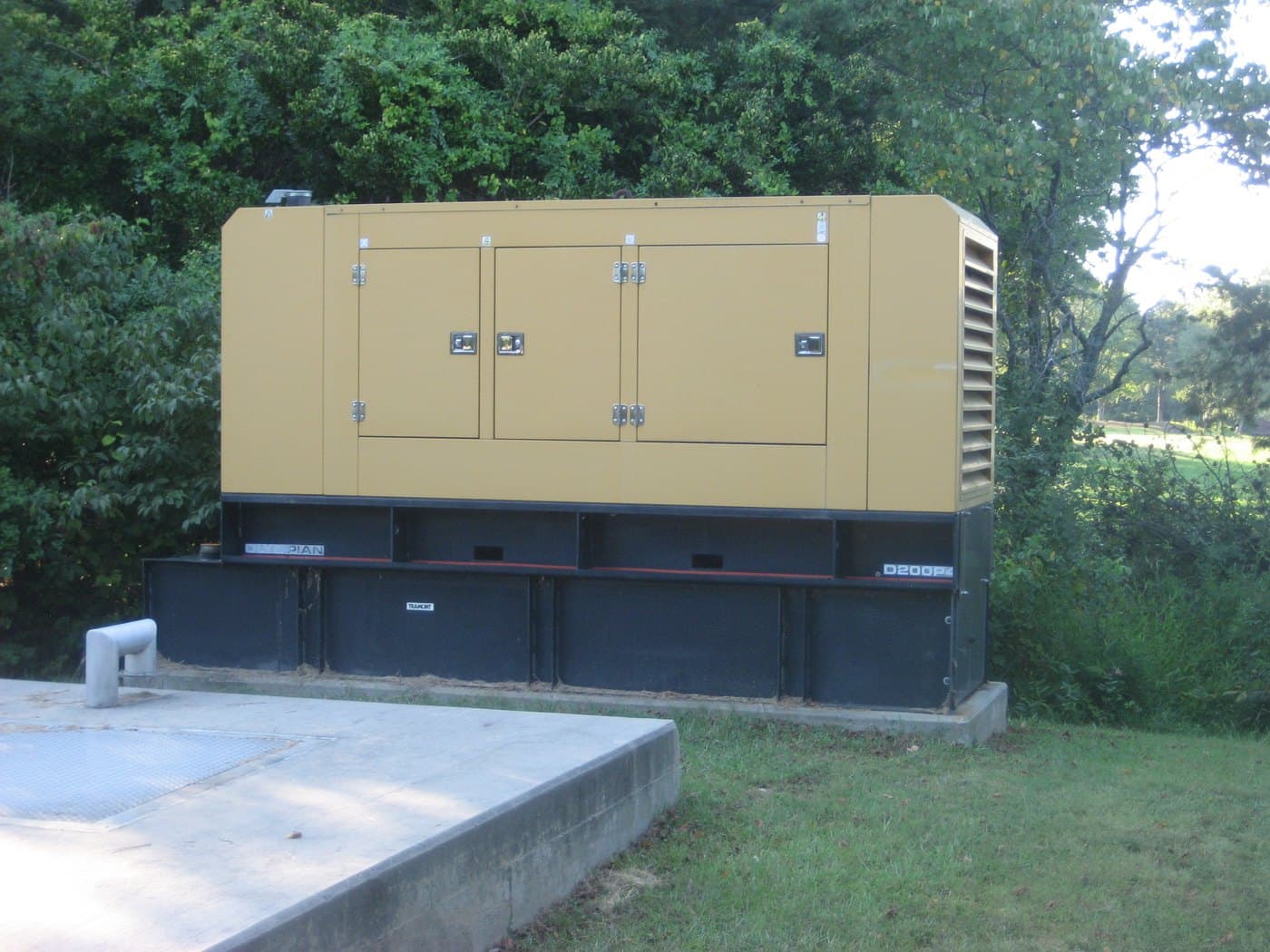
- How power reaches the site. Many plots have no grid connection during construction. A site generator sized for the real loads, with a fuel routine, is the norm. The setup is covered in setting up a site generator, and current machines are on generator rental.
The summer season sets the calendar
On most of the coast, the calendar is not set by the contractor. Many compounds restrict noisy work, heavy-vehicle movements and working hours during the summer season, when owners are in their villas. Some stop construction entirely for the peak months. Rules differ from one compound to another, so get them in writing from the compound management before you sign a programme.
In practice this splits the year into two:
- Off-season (roughly autumn to spring): the window for excavation, foundations, structure and anything that needs heavy machines and many trucks. Winter brings its own risk on the Mediterranean: storms with strong wind and rain can stop lifting and concrete for a day or two at a time. Leave float in the programme.
- Summer season: the window for quiet finishing work, if the compound allows any work at all. Plan heavy works to finish before it starts. A job that slips into June can be stopped until September.
The coastal road is also busier in summer, especially on Thursdays and Fridays, which affects delivery times for machines, materials and ready-mix.
People: accommodation and shifts
Operators, labour and supervisors usually come from elsewhere. Before mobilising, settle:
- Where the crew sleeps and eats, and who pays for it.
- Whether the operator comes with the machine (wet hire) or you supply one, as explained in wet rental vs dry rental.
- Working hours that suit both the heat and the compound's rules. Early starts are common in hot months.
- Shade, water and first aid on site, since the nearest hospital may be far.
A pre-mobilisation checklist
- Written compound rules: working hours, noise, truck movements, summer restrictions.
- Access route checked for a lowbed, with an agreed unloading point.
- Transport both ways written as fixed lines in each rental.
- A water source, a tanker of the right size and storage on site.
- A fuel supplier, a storage point and a refuelling routine.
- A generator sized for the real loads, if there is no grid connection.
- A wind limit and a person who calls lifts off.
- Crew accommodation, food and transport.
- A condition report with photographs at handover.
The short version
On the North Coast, the machines, the water, the fuel and the people all travel, so plan their arrival as carefully as the work. Book machines earlier, fix transport costs, store water and fuel on site, plan lifts around the wind, and finish heavy works before the summer season starts.
To see which machines are available and their current rates, browse the rental catalogue.
Sources and scope
Each source supports the topic described below, not every statement in this article. Foreign guidance does not replace Egyptian requirements or site rules. Use the manual matching the machine model and serial number for operation.
- EXON Radar — Egypt heavy-equipment market analytics
Aggregate counts from public Facebook equipment groups, snapshot dated 23 Sep 2026; asking prices, not sale prices.
- HSE — Planning lifting operations
Competent lift planning and supervision. UK guidance, not a statement of Egyptian law.
- HSE — Construction dust
Dust-risk assessment and suitable exposure controls.
- HSE — Loading and unloading
Safe loading/unloading arrangements. Route permits need local confirmation.
Need a machine for your site?
Browse EXON's maintained fleet or talk to the team for a project quote.
Keep reading
How Big a Water Bowser for a Site? Cubic Metres, Trips, and Dust vs Compaction
How big a water bowser for a site in Egypt: work out daily cubic metres for dust and compaction, count real trips per shift, and pick tank size and number.
Foundation Excavation in Egypt: Machines, Trucks and the Order of Work
Foundation excavation equipment in Egypt: choosing the excavator for the depth and volume, working out trucks, soil replacement, compaction and the sequence.
Water Bowser for Dust Control: Sizing the Tank and the Daily Water Your Site Needs
How to size a water bowser for dust control on an Egyptian site: tank capacity, daily water volume, fill points, compaction watering and what to ask the lessor.